
Understanding the Complexity of Personality and How it Effects Production

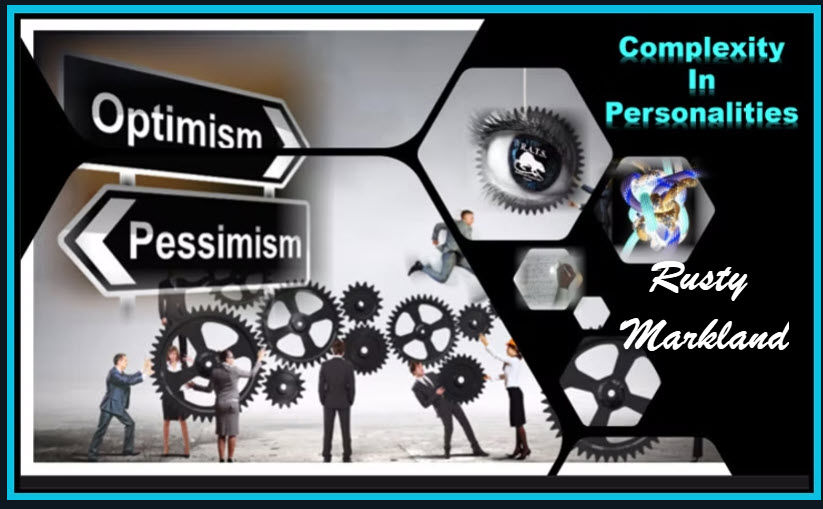
Personality traits demonstrably influence production across all industries. The process of discerning an individual's personality is more intricate than commonly assumed. For instance, in evaluating an employee who exhibits either optimism or pessimism, there is a tendency to presume that the optimistic individual will yield superior production. This is an instance of conflating a "positive" disposition with positive performance, based solely on the definition of optimism.
Conversely, pessimistic personalities are frequently associated with poor production, stemming from the perceived negative attitude inherent in pessimism. These judgmental errors by management arise from an insufficient understanding of the complexities governing personality and its effect on productivity. A lack of comprehension regarding the psychological manifestations of pessimism and optimism allows assumptions to dictate perceptions, potentially impacting both individual and corporate output.
In reality, both optimistic and pessimistic personality types possess attributes that can either positively or negatively influence employee production. Each personality offers dual avenues of application, which, if accurately recognized, can be leveraged to either enhance or detract from the overall performance of the individual and the organization.
The two categories of pessimistic reasoning are as follows:
Pessimistic Paralysis: This personality profile is most commonly associated with pessimistic employees. It is characterized by feelings of impending failure, doom, and pervasive negativity, which often prevent the employee from attaining their full potential, thereby hindering overall production.
Pessimistic Drive: This is the personality trait often overlooked or mistaken for the aforementioned paralysis. While this employee also anticipates probable failure, potential, or certain defeat, they are nonetheless compelled to confront the challenge despite believing the odds are heavily against them. This personality type is highly productive, perhaps not exhibiting the highest level of contentment, but consistently demonstrating motivation. These employees are serious and often appear stressed; however, they reliably deliver results.
Therefore, exhibiting a pessimistic disposition does not inherently equate to negative productivity. Individuals driven by pessimism, though perhaps never fully comfortable with their circumstances, maintain high productivity. While there is an assumption that highly optimistic individuals are both the happiest and most productive, data may occasionally reveal the opposite.
The two categories of optimistic reasoning are as follows:
Optimistically Impaired: This profile pertains to the overly confident, "can-do" employee who expresses exuberant encouragement and perceives all challenges as surmountable. While this attitude is commendable and often infectious, the excessive confidence frequently results in misjudgment or a failure to adequately assess challenges, leading to significant setbacks. Overconfidence proves to be a detriment; while it is often stated post-factum that "we tried hard," a repeated failure to achieve objectives is characteristic of the optimistically impaired. They are "happy" and motivated, yet they tend to be underachievers.
Optimistically Driven: This trait represents confidence coupled with accountability, experience, and a strategic plan, rather than mere rhetoric. This employee operates at the highest level of effectiveness, clearly recognizing and understanding obstacles and maintaining a determined focus on success. This employee typically maintains a discreet profile, allowing performance metrics to serve as evidence of their achievement.
While certain personality types are objectively more productive than others, a successful team or organization necessitates a blend of these traits. Management's responsibility is to identify each trait and its potential, thereby maximizing benefits for both the employee and the company.
Nothing is truly "simple"; embracing complexity is essential for understanding one's team.



Comments