
Building An Economy of Trust in the Service Industry

Updated: Feb 24
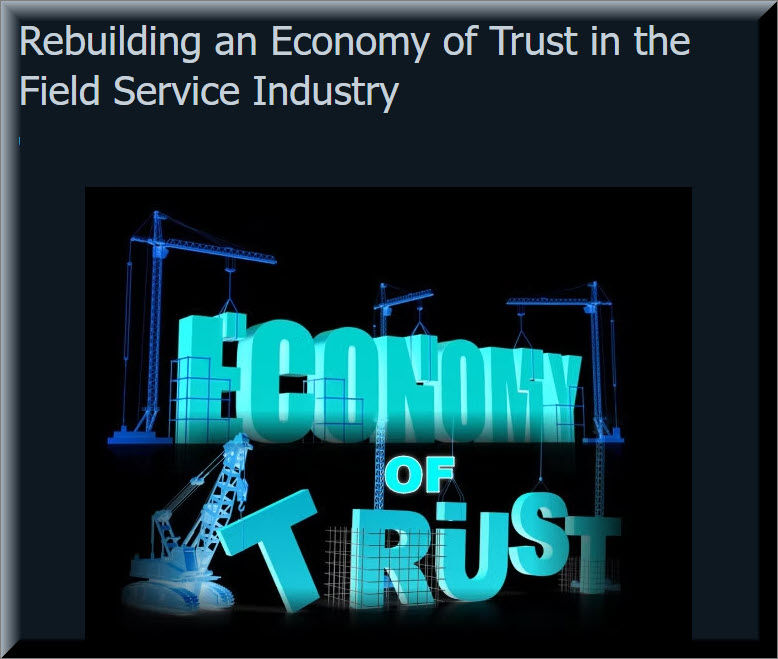
In preceding eras, service providers enjoyed an economy of trust predicated upon reputation, personal recommendations, and the caliber of their workmanship. The world was less vast, communities were more cohesive, and the service provider was often a neighbor, acquaintance, or family member. As the nation expanded, public demands increased, and over time, a pervasive suspicion of corporations and private salespeople intensified. Numerous segments of the populace were not merely disillusioned; they had justifiable grounds for skepticism, as unscrupulous enterprises exploited the vulnerable, appropriating their diligently earned funds while providing minimal, if any, commensurate services. Consequently, the designation "Salesman" accrued a pejorative connotation, a perception that endures within various regions of the country.
Contemporary healthcare practitioners likewise confront obstacles in re-establishing the confidence they once commanded. Physicians routinely conducted domestic visits; it was not unusual for a family doctor to attend a confinement and subsequently minister to that family for subsequent decades. The traditional "family doctor" has been superseded by a system reliant upon "specialists," resulting in a proliferation of referrals, the reduction of patients to mere statistical entries, and the relegation of "bedside manner" to historical anecdotes. It is therefore unsurprising that contemporary field service companies face challenges to public confidence as they pursue field sales in an environment marked by suspicion.
Notwithstanding the transformations within the medical profession, it has largely preserved a superior standing within the service industry. For the most part, individuals still adhere to the counsel of their physicians or dentists, albeit without the uncritical deference of the past, as seeking supplementary professional opinions has become conventional.
The difficulty for other sectors of the field service industry—encompassing pest and termite control, HVAC, plumbing, or electrical services—to cultivate comparable respect and reliance warrants meticulous consideration. Is it appropriate to draw an equivalence between a termite inspector or an HVAC technician, and a certified physician?
The answer may be affirmative, as all operate in response to defined "needs." Whether the necessity involves a prescription for pharyngitis or the remediation of an obstructed commode, a clear and immediate requirement exists that mandates resolution. Many entities within the field service industry have inherited a challenging legacy stemming from antecedent malpractices, against which reputable companies must now compete. To surmount outmoded perceptions prevalent in the field and service industries, a fundamental paradigm shift is required, not only for the field staff and management of the involved companies but also for the consumer contemplating engaging such a service provider.
When a consumer initiates contact with a service provider, whether in the healthcare sector or the general service industry, they are fundamentally soliciting assistance; the interaction is more akin to the execution of an order than to the culmination of a sale. Therefore, the widespread difficulties enterprises encounter in this regard are perplexing. The core issue centers on trust and confidence, and it begins when the consumer uses the internet to research the company before scheduling the appointment. If an appointment is scheduled, half of the sales process is complete. At that juncture, the only possible course is to "unsell" the service, which is precisely what numerous providers inadvertently accomplish.
Cultivating an Economy of Trust, particularly in the current era of the proliferation of agencies offering online assessments and ratings of service and quality, requires a comprehensive understanding of the role of perception. While quality is frequently prioritized, the sale must first be secured before the quality of workmanship can be demonstrated; absent the sale, no work can be executed.



Comments